
Is Walnut or Maple Better for Cutting Boards? A Comparison of Wood Types

Maple vs Walnut Wood
There are plenty of different wood types to choose from when shopping for Cutting Boards. Our cutting boards come in maple and walnut woods - as well as cherry, too!
When choosing which wood type is best for you, it's important to consider three critical qualities: durability, food safety, and ease of maintenance. These factors help ensure your cutting board is highly durable, knife friendly, and suitable for home cooks seeking precise cutting and less maintenance. But equally as important is which color you prefer - dark, rich walnut or light, modern maple.
Though the options are endless, many customers are left wondering, which wood is the best wood? Truthfully, it depends. Are your kitchen cabinets light or dark? Do you want to match them or have a contrast?
Other features to consider when choosing hard maple or walnut is hardness, maintence, and moisture resistance. Read along to hear all about our different woods and how to choose your favorite!
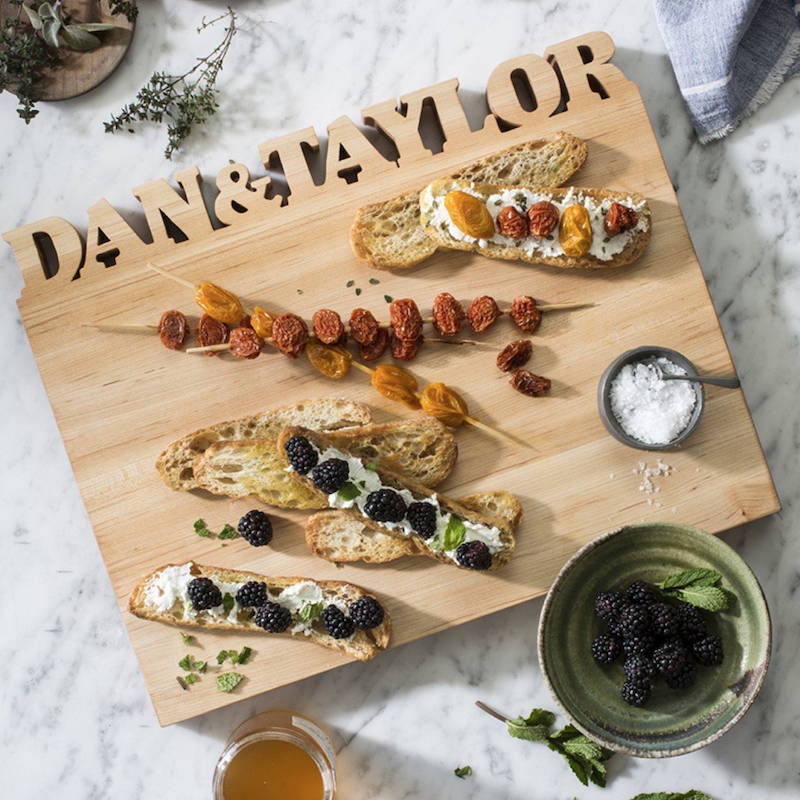 Maple Wood Cutting Board Benefits
Maple wood is known for its light color and modern look, which fits perfectly with any decor. Hard maple is considered the gold standard for cutting boards due to its dense grain, high Janka hardness scale rating (approx. 1450 lbf), and its ability to resist bacteria. This makes maple boards scratch-resistant, and naturally resistant to bacteria and moisture. The butcher block construction helps them resist warping and ensuring longevity.
Maple cutting boards are resistant to knife marks and can last decades with good care. The light color and fine grain pattern of a maple board give it a timeless, classic appeal. The lighter wood makes it practical for spotting when it needs cleaning. Maple is also typically more affordable and widely available than walnut, making it the most budget-friendly wood for cutting boards.
Here at Words with Boards, we find a Maple Cutting Board doesn’t dry out as fast as walnut and other woods. This makes caring for it a little easier and means less frequent conditioning is needed. Maple is known as the industry standard because of how widely available and dense it is.
Maple wood starts out light but will darken a little with use.
Laser engravings will also show up very well on maple as opposed to the dark color of walnut.

Walnut Wood Cutting Board Benefits
Walnut, especially black walnut (American walnut), is prized for its rich, dark tone, striking grain patterns, and overall aesthetic appeal, making it a premium price, luxury option. Walnut boards are among the most expensive boards we offer due to their premium price and demand. Walnut is slightly softer than maple, with a Janka rating of approximately 1010 lbf, making it more prone to dents and scratches, but it is admired for its self-healing properties and durability.
Walnut contains natural oils that provide some moisture resistance, but regular conditioning and frequent oiling are necessary to maintain its surface integrity.
Walnut is known for its knife friendliness and is gentler on knife edges than maple, helping to keep knives sharper longer. Walnut boards can last many years with good maintenance. The more visible character marks add to their unique look.
As you can see from the picture the wood color varies a little, it’s not a solid color which we feel adds to the beauty! Any Walnut Cutting Board we create is butcher block, this means 1” pieces of wood are glued together to prevent warping. And, this is why you get the color variations.
If food stains on your cutting board are a concern for you, then the dark color walnut offers may be a better choice.
Walnut wood provides good contrast to light countertops and food really pops on the dark, rich color.
Walnut may not be as hard as maple, but don’t worry- it’s perfectly fine to use as a cutting board and is highly durable for daily use.
Shop Walnut Cutting Boards
Wooden Cutting Board Types
Looking for a little bit more of an in-depth look at our different types of cutting boards? We have put together an entire guide to navigating our three Wooden Cutting Board Types; maple, cherry, and walnut.
When it comes to construction, we offer both edge grain boards and end grain cutting board options. Edge grain construction uses long strips of wood placed side by side, making edge grain boards durable and easier to maintain, though they may show knife marks more quickly.

End grain boards, like the one above, are more durable, hide knife marks better, and are often more expensive due to their craftsmanship and material quality. End grain boards are excellent if you do a lot of chopping and are the best if your top priority is knife friendliness.
Additionally, all of the wood we use to make cutting boards comes from sustainable forests and for every product sold, a tree is planted in North America. Read more One Tree Planted.

Cherry Wood Cutting Board Benefits
Another wood we offer is cherry which has become more popular in the last few years.
A Cherry Cutting Board has a soft reddish hue and like maple will darken with age. Cherry is a lighter wood than walnut, requires more maintenance, and is softer than hard maple, but still a great choice! Cherry boards are admired for their aesthetic appeal and natural patina, though they require more diligent care to preserve their appearance.
If you already have a lot of cherry wood in your home, a cherry cutting board will fit right in with your decor. However, if looking for a harder wood - you may want to choose maple wood.
For those interested in other options, teak cutting boards are also popular. Teak wood is extremely durable, naturally water resistant, rich in natural oils, and requires less maintenance and less frequent conditioning than other woods, but is also a premium-priced choice. Bamboo is another good board material, known for its hardness, rapid growth rate, and high renewability. We personally don't like bamboo because it is too hard and is not much different than cutting on glass.